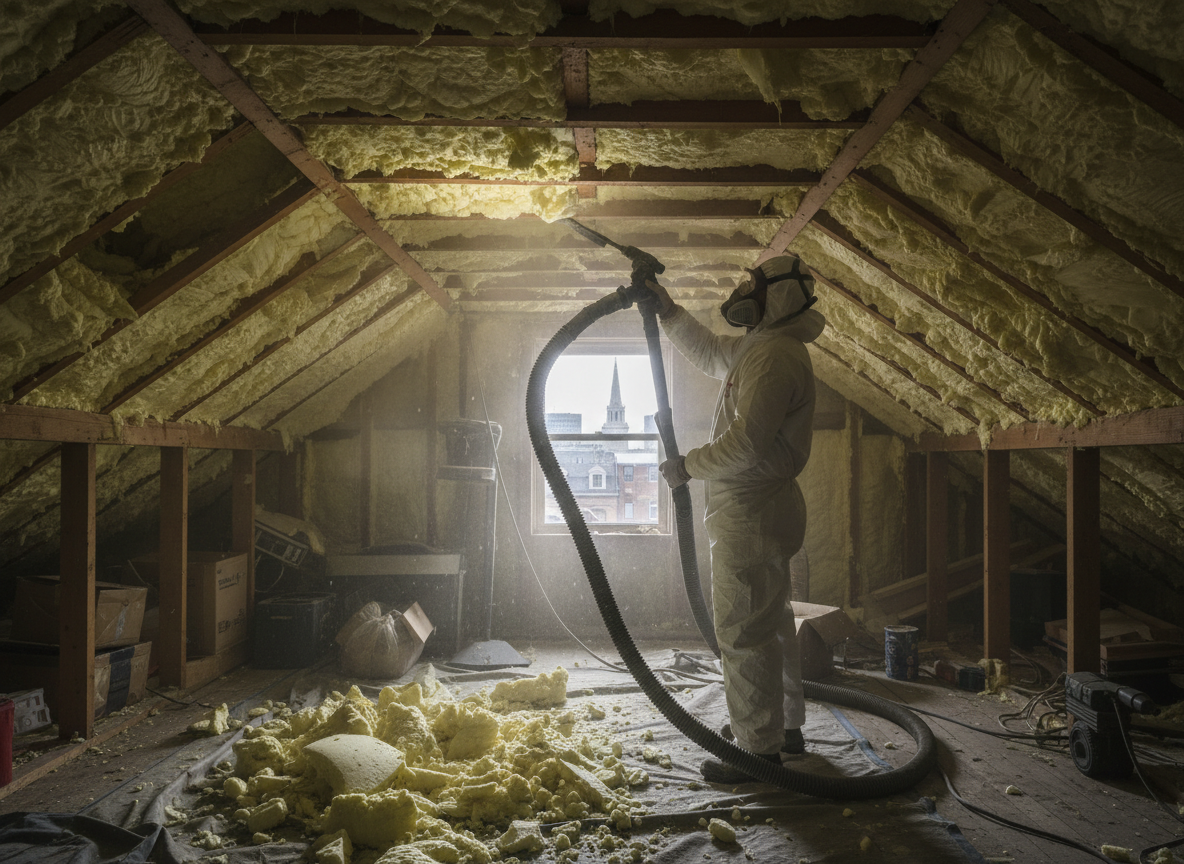
Boston’s older housing stock around the town centre and along the River Witham often features Victorian and Edwardian timber joists that were never designed for impermeable insulation. When closed-cell spray foam is applied directly to these rafters, it traps condensation that the fenland climate produces year-round. Over time this leads to wet rot and reduced ventilation in the roof void, especially in properties near the marketplace where roof pitches are shallow and airflow is already restricted.
Removal work here requires careful separation of the foam from lath and plaster ceilings below without disturbing the original ceiling structure. Technicians must also manage the high water table that affects basements and ground floors in Boston; any debris that falls through can carry moisture into living spaces. The process includes negative-air machines to contain dust and prevent it settling on nearby properties in the tight terraced streets typical of the area.
After extraction, the loft must be left with restored ventilation paths that meet current Building Regulations for pitched roofs in Lincolnshire. This often means fitting new ridge and eaves vents sized for the roof volume, because the original foam had blocked the natural stack effect that once kept these roofs dry. Homeowners in the surrounding villages frequently discover the full extent of timber damage only once the foam is gone.
Moisture Mapping Before Removal
A full moisture survey of joists and wall plates is carried out first so any hidden wet spots near the eaves are identified and dried before new insulation is considered.
Technician insight
In Boston the thing that catches most people out with loft spray foam removal is how quickly moisture builds up once the foam is stripped; the flat fenland weather keeps humidity high and the shallow pitches on terraces around Market Place trap every bit of condensation against the joists.
Terraced House Near the River Witham
Homeowner noticed musty smells and sagging ceiling plaster in a 1900s terrace. Inspection revealed closed-cell foam had sealed the rafters completely. We removed the foam, dried out two affected joists, and added proper ridge ventilation. The loft now breathes and the ceiling has stayed dry through the winter.
How it works
- 1
Initial Loft Inspection
Access the loft through the existing hatch and record foam depth, timber condition and any signs of rot around the Boston property.
- 2
Containment Setup
Install dust barriers and negative-air filtration to protect rooms below and neighbouring homes in the terrace.
- 3
Foam Extraction
Use handheld scrapers and low-speed rotary tools to peel foam from rafters without gouging the original timber.
- 4
Debris Removal and Cleaning
Vacuum all residue and dispose of it off-site, then wipe joists to remove remaining adhesive before ventilation upgrades.
- 5
Ventilation Restoration
Fit new eaves and ridge vents sized for the roof to restore airflow typical for fenland properties.
Pricing
Cost depends on loft size, foam thickness and extent of any timber repairs needed; quotes are provided after inspection.