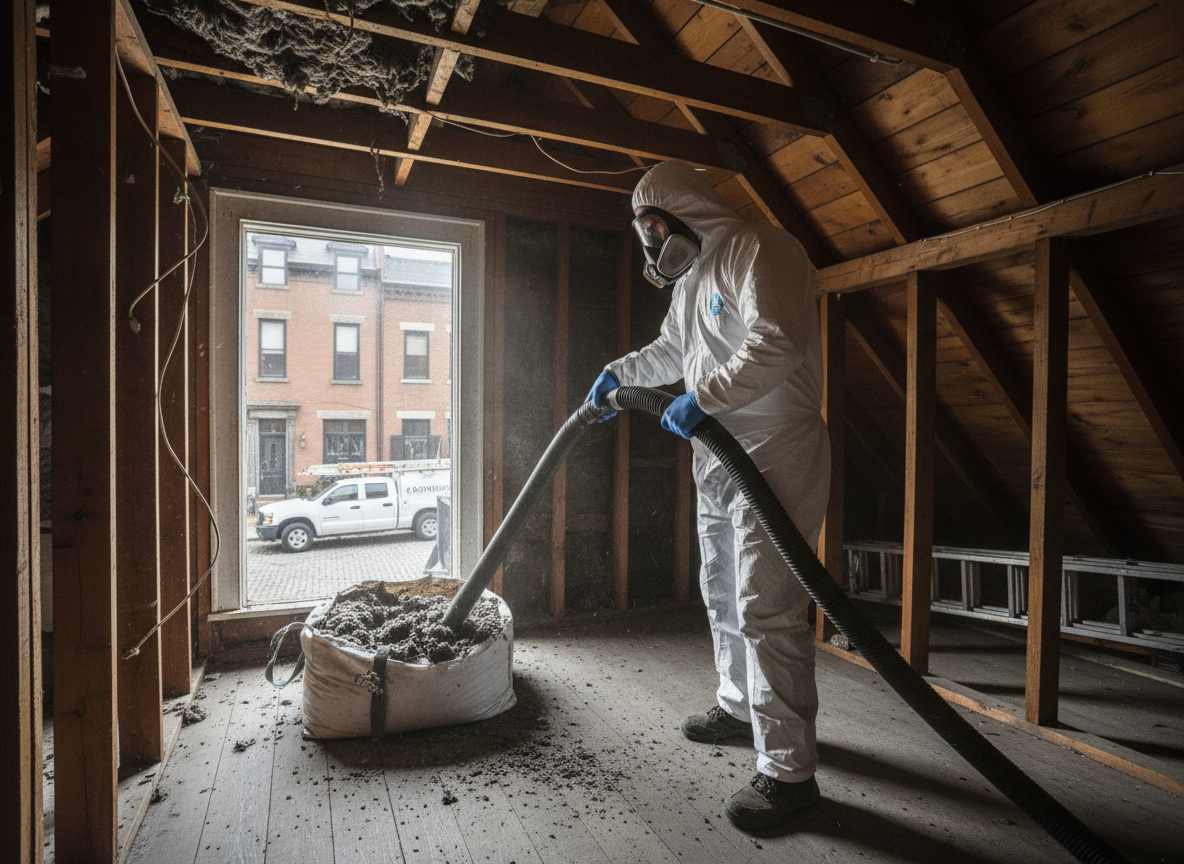
Boston's Victorian terraces and 19th-century market town properties often contain closed-cell spray foam applied directly to rafters or between joists in the 2000s. Removing it requires careful cutting around original timber to avoid structural damage, especially where previous installers bridged vents and created hidden moisture pockets in the damp Lincolnshire climate.
The flat fenland terrain around Boston means many roofs see prolonged condensation cycles in winter. Foam bonded to older lath and plaster ceilings can pull substrate away during extraction, so crews work in small sections with negative air machines to control dust before any debris reaches the market square below.
Homeowners in areas like Skirbeck and Wyberton frequently discover foam blocking eaves ventilation after heavy autumn rain. Proper removal includes restoring airflow paths and checking for rot that developed under the insulation, rather than simply peeling back the material and leaving cavities exposed.
In central Boston properties near the River Witham, crews must also manage limited access through narrow loft hatches and coordinate with neighbours when party walls share foam layers. Each job ends with a full vacuum of rafters and a written note of any remaining fixings that could affect future roof work.
Technician insight
In Boston the thing that catches most people out with insulation removal service is how the fenland damp gets trapped behind the foam on north-facing roofs near the Witham; once you start cutting you often find the rafters have already started softening and the job turns into a repair before you can finish the extraction.
Skirbeck Terrace Loft
Homeowner called after noticing mould stains on bedroom ceilings following heavy winter rain. Inspection showed closed-cell foam had sealed the eaves on a 1920s terrace, trapping moisture against the original rafters. We removed the foam in sections, restored the vents, treated the affected timber, and left the loft ready for proper breathable insulation.
How it works
- 1
Site Assessment
Inspect attic or wall cavities in the Boston property, note foam type, depth, and any timber or plaster damage caused by prior installation.
- 2
Containment Setup
Seal off living spaces with plastic sheeting and negative air units to prevent dust migration into the rest of the house.
- 3
Foam Extraction
Cut and peel foam in controlled sections, protecting original rafters and restoring ventilation routes blocked during the original install.
- 4
Cleanup And Inspection
Vacuum all residue, check for hidden rot or damp, and leave the space ready for new insulation or repair work.
Pricing
Cost depends on property age, foam thickness, and access difficulty. Upfront quotes provided after inspection.