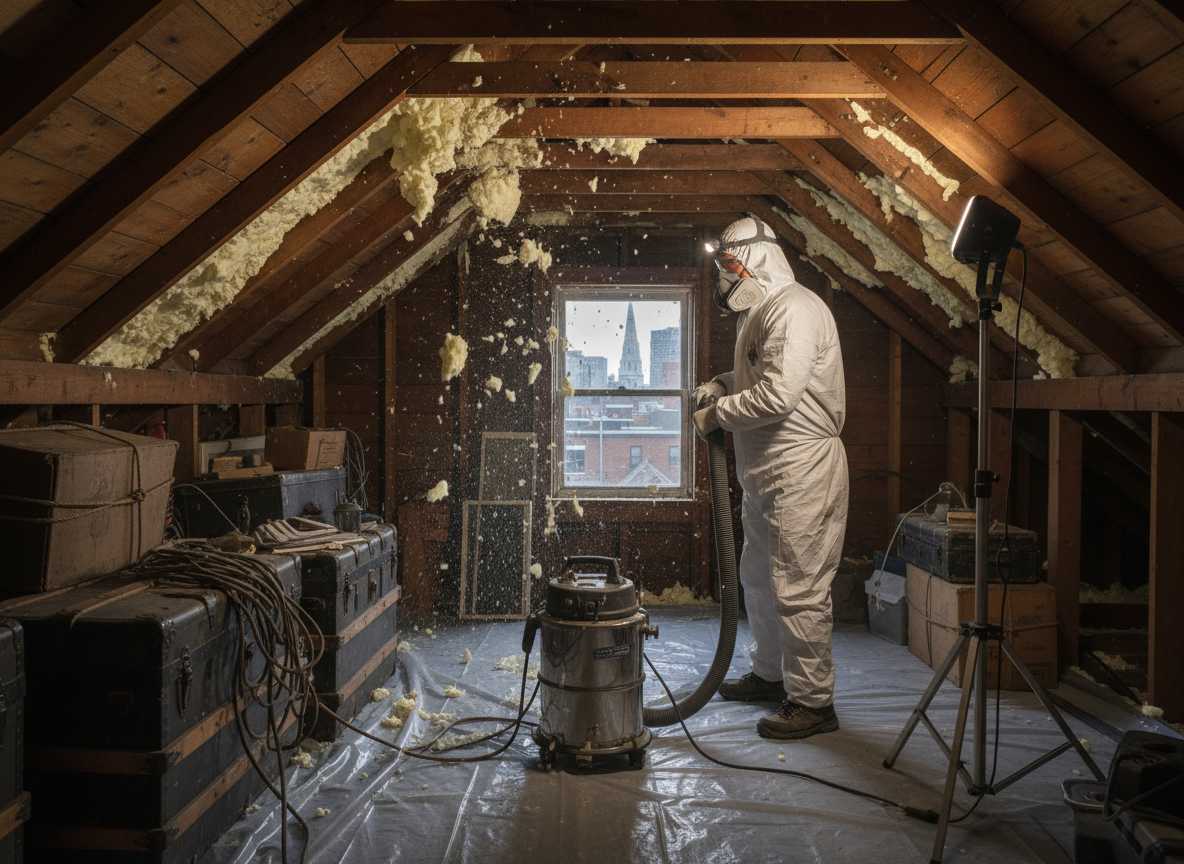
Attic spray foam in Boston homes often sits directly against rafters and joists in properties built before modern ventilation standards. Lincolnshire's flat terrain and high water table mean moisture lingers longer after rain, allowing closed-cell foam to trap condensation against wood. Removal crews must cut and peel sections in controlled strips while monitoring for hidden rot that only appears once the foam is gone. Dust and debris fall through ceiling voids into living spaces below, so floor protection and negative air setups become essential on every job.
Older Boston terraces frequently have lath and plaster ceilings that crack under vibration from scraping tools. Technicians work from above using hand tools and low-speed vacuums to limit damage. Open-cell foam releases more dust during removal than closed-cell, requiring extra containment around loft hatches. Local building stock also includes converted agricultural buildings where foam was applied over corrugated sheets, creating different edge conditions at the eaves.
Handling Fenland Moisture During Removal
High groundwater in the Boston area means attics can re-wet quickly after foam is stripped. Crews install temporary ridge vents and check for blocked soffits before leaving site. Any remaining damp timber must be left exposed for inspection rather than covered again immediately.
Common Edge Cases in Boston Attics
Foam applied over electrical cables or junction boxes requires circuit isolation first. In some Market Place conversions, foam bridges party walls, so removal stops at the boundary to avoid affecting neighbouring properties. Always verify that the original install did not block required airflow paths required by current UK building standards.
Technician insight
In Boston, the thing that catches most people out with Attic spray foam removal is how the surrounding fens keep humidity high year-round, so foam bonds tighter to joists than it does inland and often hides soft timber that only shows once the foam comes off.
Terrace Attic in Central Boston
Owner reported persistent damp smells after heavy autumn rain. Inspection showed closed-cell foam trapping moisture against rafters in a pre-1900 terrace. We removed the foam in sections, exposed the affected timber, and left the space ventilated. Follow-up confirmed no further mould growth once airflow was restored.
How it works
- 1
Site Inspection
Access the attic from 31a Market Pl jobs and map foam coverage, timber condition, and any electrical or ventilation conflicts.
- 2
Containment Setup
Seal loft hatch and install dust extraction to protect rooms below in terraced Boston homes.
- 3
Foam Removal
Cut and lift sections in manageable pieces while checking for hidden damp or rot caused by fenland conditions.
- 4
Clearance and Ventilation Check
Remove debris, inspect rafters, and confirm airflow paths remain open before handover.
Pricing
Upfront quotes follow a site visit because attic size, foam thickness, and access vary widely across Boston properties.